ORGANIC WASTE RECYCLING
What's Organic Waste?
Organic Waste refers to waste that can go in the organics cart including food waste and yard waste. State law requires all of California to separate their organic waste, such as food waste and food soiled paper, from their garbage that would otherwise go to the landfill.
What is SB 1383?
In September 2016, Governor Brown signed into law SB 1383, establishing methane emissions reduction targets in a statewide effort to reduce emissions of short-lived climate pollutants (SLCP) in various sectors of California's economy.
SB 1383 establishes targets:
- Reduce organic waste disposal 50% by 2020 and 75% by 2025.
- Rescue food and feed Californians in need; for people to eat at least 20% of currently disposed surplus food by 2025.
- Recycle organic materials into new products.
- Reduce landfill waste and pollution.
From 2016-2020, the California Department of Resources, Recycling and Recovery (CalRecycle) worked to develop regulations to achieve the goals of SB 1383. This unfunded state mandate under SB 1383. finalized by CalRecycle in November 2020. will take effect in January 2022.
Why is SB 1383 Important?
The State has committed to reduce greenhouse gas emissions, improve human health, and create clean jobs that support resilient local economies. Implementing the statewide plan under SB 1383 will reduce short-lived, harmful, super pollutants with significant warming impacts, and is essential to achieving California’s climate goals.
Organic waste in landfills emit 20% of the state’s methane, a climate super pollutant 84 times more potent than carbon dioxide. Organic waste, such as food scraps, yard trimmings, paper, and cardboard, make up half of what Californians send to landfills. Reducing organic waste in landfills can reduce methane emissions.
Cities and counties throughout California are beginning to see the effects of climate change, including:
- Longer droughts and warmer temperatures
- Increasing number of California wildfires
- Bigger storms
- Coastal erosion due to rising sea levels
Reducing methane emissions is essential to address the many impacts of climate change on human health and on the environment. In addition to climate change, more localized environmental impacts associated with landfill disposal of organic waste are causing immediate negative impacts on our community. Landfilling organic waste is a significant source of local air quality pollutants, which cause respiratory issues. Diverting organic waste from landfills can significantly reduce the associated negative impacts associated with air quality.
Learn more about Senate Bill 1383.
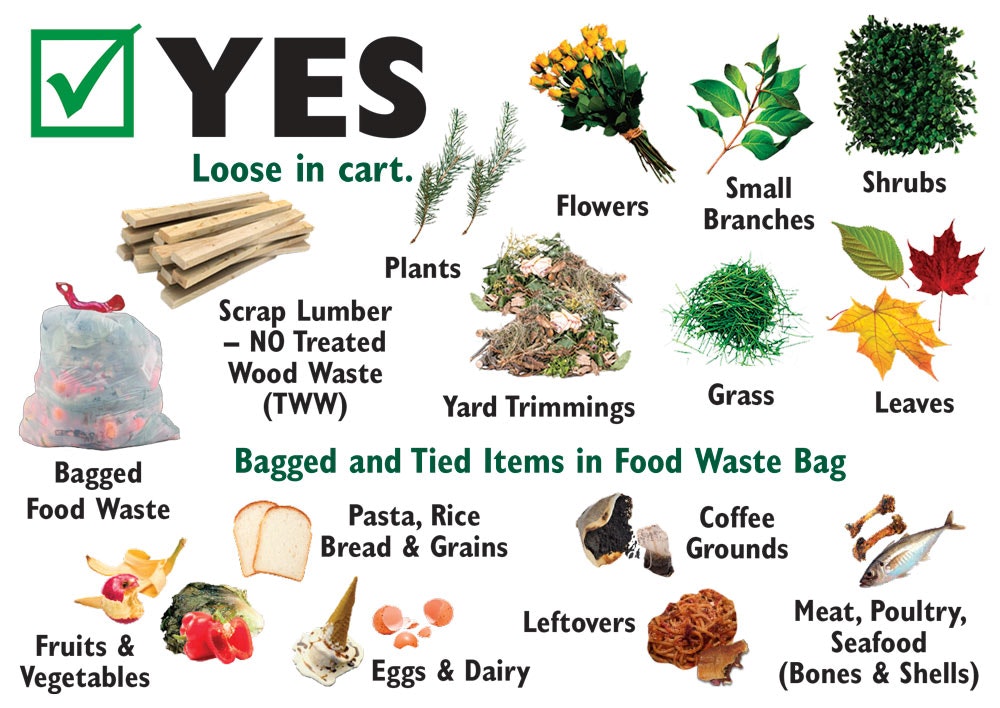
Please see below for acceptable and unacceptable items.
CIBCSD Food Waste/Organics Recycling: Please note that the green organic waste bins will be emptied on your respective trash day.
Your food waste must be bagged, but your yard waste can be loose. Please refer to the attached image for the full list of approved organic waste items.